


A is for Alibi by Sue Grafton
When Sue Grafton published A is for Alibi in 1982, she turned the whodunit genre upside down with her style of tough-girl detective fiction. She launched one of the most ambitious series concepts in mystery history: a 26-novel alphabetical sequence. It’s akin to starting to solve a case but choosing to give yourself 25 more to complete the task. Grafton needed grit, a touch of madness, and an audience that desired the edge and authenticity of a “hard-boiled” private eye. Fortunately, she had all three.
How I Stumbled Upon This Alphabet Killer
I found A is for Alibi the way you find something when you’re stuck in a rut—working the graveyard shift at McDonald’s, bored out of your mind, and digging through a manager’s stash of forgotten paperbacks. There it was, sandwiched between Crime and Punishment and a tattered romance novel with an unforgettable title. I wasn’t exactly sold at first; an alphabetical mystery series sounded kitschy, like a gimmick to sell books to crossword enthusiasts. But after flipping through the first chapter, Kinsey Millhone’s no-nonsense voice hooked me like a fish on a line. One break-time chapter turned into another, and before I knew it, my fries were cold, and I was halfway through the case.
How Sue Grafton Dreamed Up Kinsey Millhone
The idea for A is for Alibi came to Sue Grafton during the most trying period of her life: a bitter divorce that might’ve driven anyone else to drink or despair. Instead, Grafton turned to writing. Fueled by anger and a sharp wit, she began brainstorming how to kill her ex-husband (not literally, thankfully). As she worked out hypothetical murder plots, the pieces for Kinsey Millhone and the Alphabet Series started to fall into place. The alphabet gimmick wasn’t part of the plan at first, but once she wrote A is for Alibi, the concept of an entire series based on the alphabet struck her as both ambitious and creatively liberating. “I’m going to make it to Z,” she declared, a promise that became her life’s work.
Kinsey Millhone: A P.I. Who Couldn’t Care Less About Your Feelings
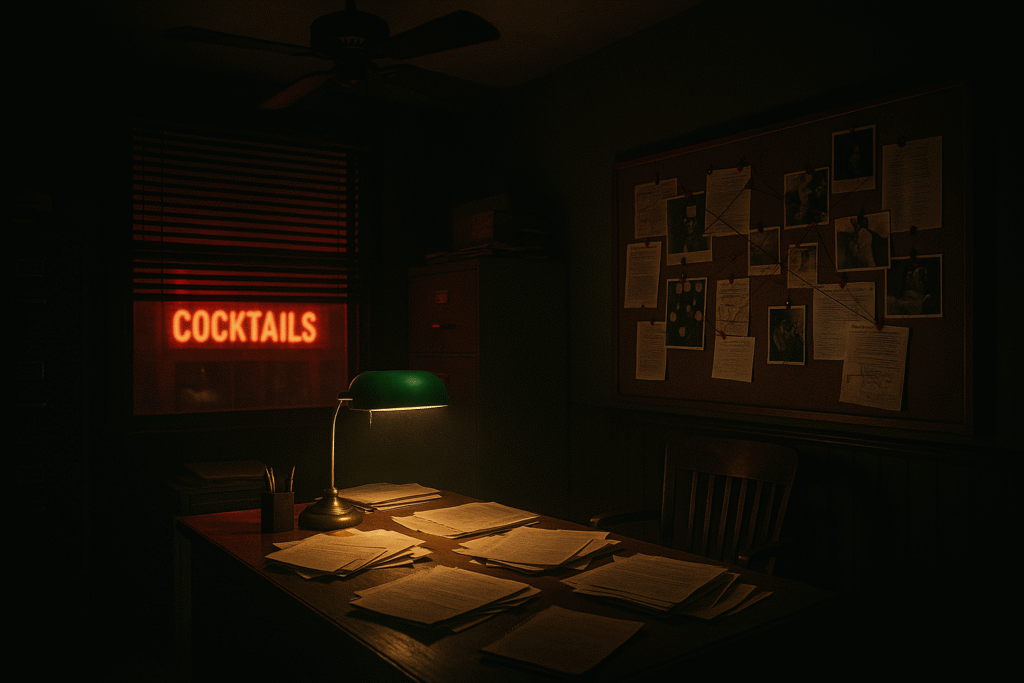
In A is for Alibi, we meet Kinsey Millhone, a private investigator as uncompromising as they come. Kinsey is everything we don’t expect from a typical detective heroine. She’s not a damsel waiting for a hero; she’s rough around the edges, fueled by a diet that would horrify a health guru, and packing enough cynicism to run a noir film festival. As the story unfolds, we see Kinsey’s world through her sharp, unfiltered perspective, and it’s not a cozy picture.
The Case, the Coldness, and the Criminal Appeal
The novel revolves around a classic setup: a woman, Nikki Fife, who’s been convicted of murdering her husband, wants Kinsey’s help in clearing her name. Nikki’s been out of prison for eight years, and if she’s innocent, that’s eight years of wrongful punishment. If she’s guilty? Well, Kinsey will find out soon enough. This is no cozy mystery; it’s a cold slice of life. There’s adultery, bitterness, and a hefty slice of resentment, all the things we love to avoid but can’t resist reading about.
Grafton lures readers in by not making anyone likable or easy to trust. Even Kinsey herself comes off as aloof, emotionally walled-off, and darkly funny, the kind of person who would probably tell you to get lost if you tried to ask her about her day. And that’s precisely the appeal. Kinsey isn’t interested in being anyone’s friend; she’s here to do her job, and maybe, just maybe, get to the bottom of what happened.
Grafton’s Gritty Innovation: A P.I. Who Feels Like the Real Deal
With A is for Alibi, Grafton does something that hadn’t quite been done before. Yes, we had Sherlocks and Spades, but Kinsey Millhone was groundbreaking, a female detective who wasn’t just “tough for a woman” but tough, period. She’s not a femme fatale, not a caricature. She’s painfully real. She drinks too much, has questionable romantic interests, and prefers function over fashion. Kinsey is vulnerable, but her armor isn’t easily penetrable. Grafton takes us inside the mind of someone who’s walking a tightrope between ethical duty and personal demons, and it’s endlessly compelling.
Sue Grafton’s greatest strength here is the honesty with which she presents her characters. There’s no sugar-coating, no glossy sheen over the rough parts. She writes Kinsey as flawed, as someone who sometimes makes questionable decisions, and as a character whose greatest strength is her brutal self-awareness. Kinsey is raw; through her, Grafton asks readers to embrace the gray areas of morality and justice. We’re left questioning everyone’s motives, including Kinsey’s.

A is for Alibi: A Manual on What’s Wrong With Us All
What makes A is for Alibi resonate more than 40 years after its release is that it’s more than a mystery; it’s a dissection of what drives people to extremes. Grafton writes about the psychology that festers behind closed doors, the rot that can lurk beneath polished suburban facades. Grafton’s world is unforgiving, her characters haunted by past traumas, lost loves, and unhealed wounds that fester with each turn of the page. Her message? Justice is complicated, messy, and often disappointing. It’s not as easy as locking someone up and tossing the key.
While Kinsey may seem detached, she is deeply affected by the world she inhabits. And through her, Grafton forces us to grapple with uncomfortable truths about human nature. A is for Alibi leaves you wondering who’s truly innocent and if there’s such a thing as guiltless living.
The Verdict: A Killer Start to a Legendary Series
The Alphabet Series became a monumental achievement in crime fiction, and A is for Alibi was a daring first step. Grafton promised to write through to “Z,” and while she didn’t quite make it, she left an indelible mark on the genre and a legion of readers both thrilled and haunted by her work.
Reading A is for Alibi is like stepping into the mind of a detective who’s anything but idealistic. It’s refreshing, a bit chilling, and undeniably gripping. This isn’t a book to read if you want a tidy resolution or a happy ending. It’s a mystery for people who don’t need heroes, who find intrigue in the moral ambiguity of a world where justice is rarely black and white.
And if you haven’t met Kinsey Millhone yet? Well, prepare yourself. This alphabet journey is as hard-hitting as it gets, and it all starts with A.
(Liked what you read? Consider a donation.)
Discover more from Gabriel Lucatero
Subscribe to get the latest posts sent to your email.