
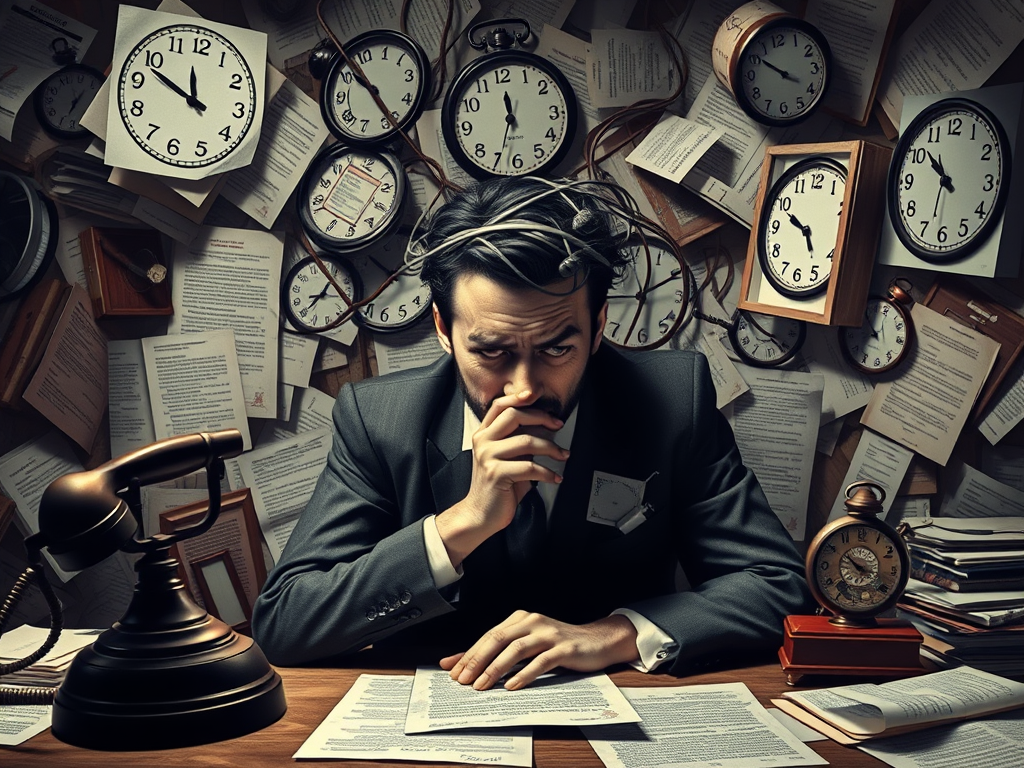

Kafka’s The Trial: A Book Review
I once spent four hours on the phone with an insurance company, trying to figure out why they denied a claim. Each agent passed me to another, their voices merging into a single, soulless script: “I’m sorry, but that’s handled by another department. Do you mind if I put you on hold?” Four hours later, I hung up, realizing something terrifying: I had just lived through Kafka’s The Trial.
But I didn’t always know what that meant. The first time The Trial came into my life, I ignored it. Some professors have a way of recommending books that make you not want to read them. Back in college, when I read The Metamorphosis, my professor said, “If you liked this, you should read The Trial.” And just like that, I shoved it to the bottom of my mental reading list. Sounds like homework, I thought. Years passed. I had forgotten about Kafka. Then, one day, while aimlessly browsing a bookstore, The Trial caught my eye. I don’t know if it was fate, guilt, or the fact that I was in a stage of my life where everything felt like a goddamn bureaucratic mess, but I bought it. And that was the beginning of the end.
There’s a particular kind of horror that doesn’t come from ghosts or serial killers but from something much worse—paperwork. Imagine waking up one morning to find yourself accused of a crime, but no one will tell you what it is. There’s no clear process, no judge you can reason with, just an endless labyrinth of contradictions and absurdity. Sound terrifying? Frustrating? Welcome to The Trial, Franz Kafka’s masterpiece of paranoia and existential dread. Kafka sketched nightmares so close to reality that they almost feel prophetic. The novel, published posthumously in 1925, tells the story of Josef K., a respectable bank employee who is arrested for an unspecified crime and thrown into a legal system so convoluted it makes the DMV look like a well-oiled machine. K. struggles, fights, tries to navigate the mess, but at every turn, he finds himself sinking deeper into a world that defies logic. For anyone who has ever been caught in a bureaucratic hellscape—whether it’s dealing with immigration papers, insurance claims, or just trying to cancel a gym membership—The Trial hits a nerve. But is it just a bleak prophecy of totalitarianism, or is Kafka winking at us from beyond the grave?
Let’s dive into it.
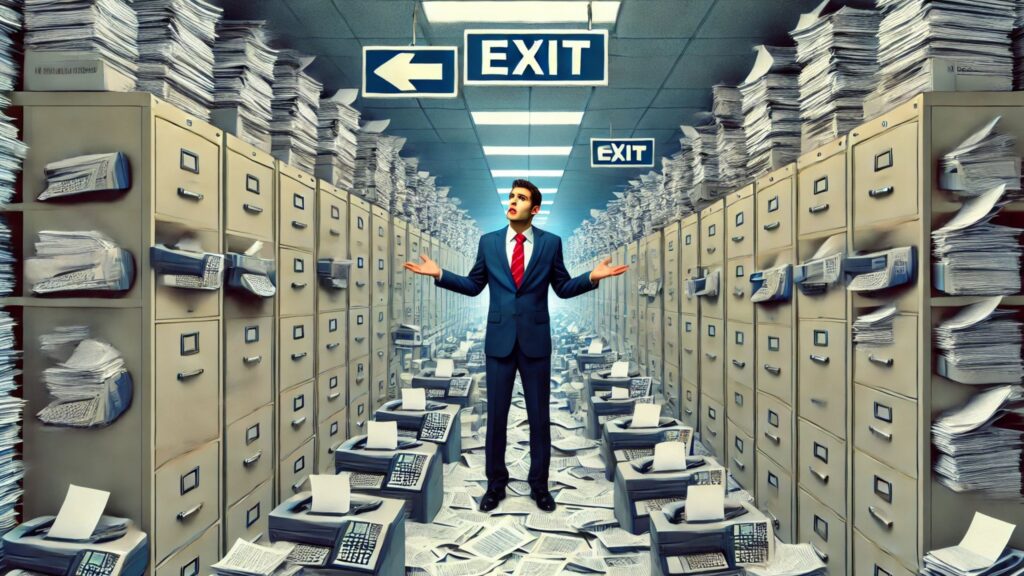
Kafka’s Worst Nightmare (And Ours Too)
Kafka didn’t live to see The Trial published, but damn if it didn’t predict the future. Bureaucracy today is worse than ever, except now we have customer service chatbots to add another layer of frustration. The novel reads like a fever dream about a legal system that doesn’t care about justice—it only cares about keeping itself alive. Josef K. is every man and no man at once. He’s a bank employee, so he’s presumably used to structure and order, but that means nothing when he’s tossed into a system that refuses to give him straight answers. His arrest isn’t even dramatic—two low-level employees show up in his boarding house, mumble something about him being under arrest, and then leave. He’s free to go about his life, but he has to defend himself against a charge no one will explain.
It’s like being sued by a ghost.
The Trial is about government oppression, legal nightmares, and the fundamental absurdity of human existence. Kafka gives us a world where the rules are unclear, authority figures are incompetent or outright nonsensical, and the only certainty is confusion. Sound familiar? It should. Kafka’s world is our world. He just wrote it in a way that makes it feel like a fable instead of a news headline.
Is This Horror or Comedy?
Kafka had a twisted sense of humor, and a lot of this book reads like a dark comedy. Think about it: Josef K. runs from office to office, meeting characters who seem completely detached from reality. One guy whispers legal advice in a church like a bootleg life coach. A lawyer spends more time talking about his connections than actually helping. Meanwhile, K. himself oscillates between righteous indignation and total resignation, as if even he knows the whole thing is a joke. And yet, it’s a cruel joke—one where the punchline is his inevitable demise. The humor in The Trial isn’t there to make you laugh; it’s there to make you squirm.
Kafka’s brilliance lies in his ability to mix tragedy with absurdity, making the whole ordeal feel like a bureaucratic Monty Python sketch. One moment, you’re laughing at the ridiculousness of it all, and the next, you realize this is the exact nightmare millions of people live in every day. Have you ever tried getting a refund from an airline? Yeah, Kafka saw it coming.
And let’s talk about these characters. There’s the pathetic lawyer Huld, a man whose biggest flex is that he knows people, yet he does absolutely nothing useful. There’s the priest, who basically tells Josef K. that fighting back is pointless. And there are the two mysterious men who appear at the beginning and the end, sealing K.’s fate. They could be anyone: government agents, cosmic executioners, or just two guys who got paid 20 bucks to stab someone in an alley. Kafka never tells us, because Kafka doesn’t do closure.
The Ending That Isn’t an Ending
Now, let’s talk about that ending. Or rather, the lack of one.
Kafka died before finishing The Trial, and what we’re left with is a book that simply… stops. Josef K. meets his fate in a way that feels both anticlimactic and inevitable. Two men take him to a quarry and execute him like it’s just another mundane task on their to-do list. His final words? “Like a dog.” What the hell does that even mean? It’s the ultimate Kafka move—denying the reader a satisfying resolution because, well, life doesn’t give you one either. There’s no big revelation, no heroic last stand. Just an ending as arbitrary as The Trial itself. Some readers hate this. They want answers, closure, a moral lesson wrapped in a neat little package. Kafka gives them a shrug instead. And that, ironically, is what makes The Trial so powerful. It refuses to give us what we want, mirroring the very systems it critiques.
Bien Hecho, Kafka!
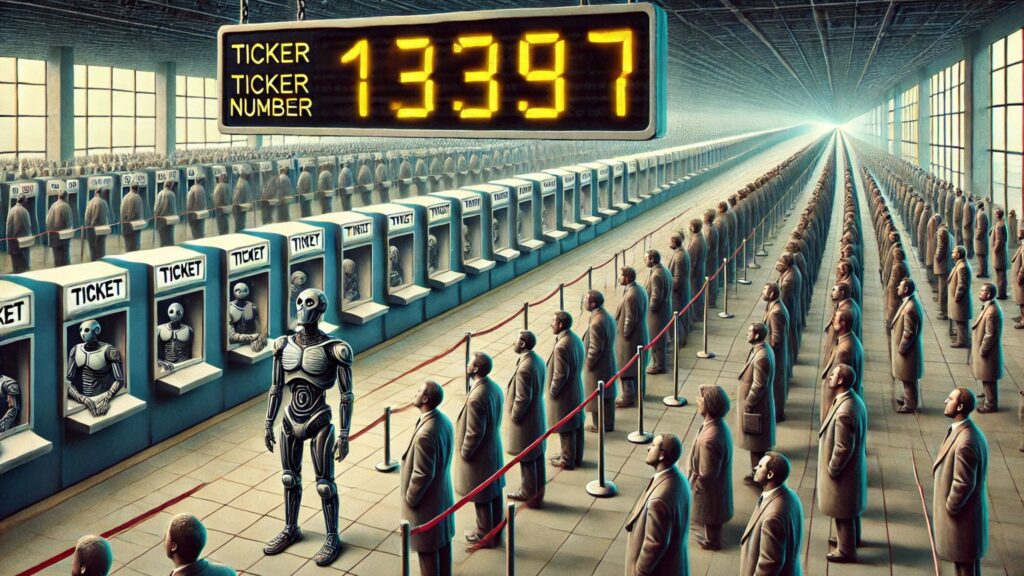
Why This Book Still Matters
Almost a century later, The Trial hasn’t lost an ounce of relevance. If anything, it’s aged too well. We live in a world where bureaucracy has only gotten worse, where navigating the legal system (or hell, just dealing with corporate policies) can feel like a Kafkaesque ordeal. Have you ever been put on hold for three hours only to have a customer service agent hang up on you? That’s The Trial. Have you ever gotten an automated email saying your application was rejected with no explanation? That’s The Trial. Have you ever tried to cancel a subscription and ended up in a labyrinth of “Are-you-sure pop-ups?” Congratulations, you’re living in Kafka’s world. But beyond its critique of bureaucracy, The Trial forces us to confront something deeper: the terrifying randomness of life. We all want to believe in fairness, in logic, in a system that makes sense. Kafka laughs in our faces and says, Nope. And maybe, just maybe, that’s the most honest thing any writer has ever done.
Final Verdict
So, should you read The Trial?
If you’re looking for a straightforward legal drama with a satisfying resolution, absolutely not. This book will frustrate you, confuse you, and leave you with more questions than answers. But if you’re willing to embrace the chaos, to see the dark humor in the absurdity of life, then The Trial is a masterpiece. Kafka drops you into a nightmare and forces you to figure it out for yourself. And in a world where logic often fails us, that might just be the most valuable lesson of all.
Support An Independent Writer
Make a monthly donation
Make a yearly donation
Writing takes time, coffee, and occasionally… the whispers of things that shouldn’t be named. If you’d like to help keep the stories coming, a donation helps more than you know.
Whatever you can give.
I truly appreciate it.
Your contribution is appreciated.
Your contribution is appreciated.
DonateDonateDonateDiscover more from Gabriel Lucatero
Subscribe to get the latest posts sent to your email.