

Let me tell you about the first time I read Carrie.
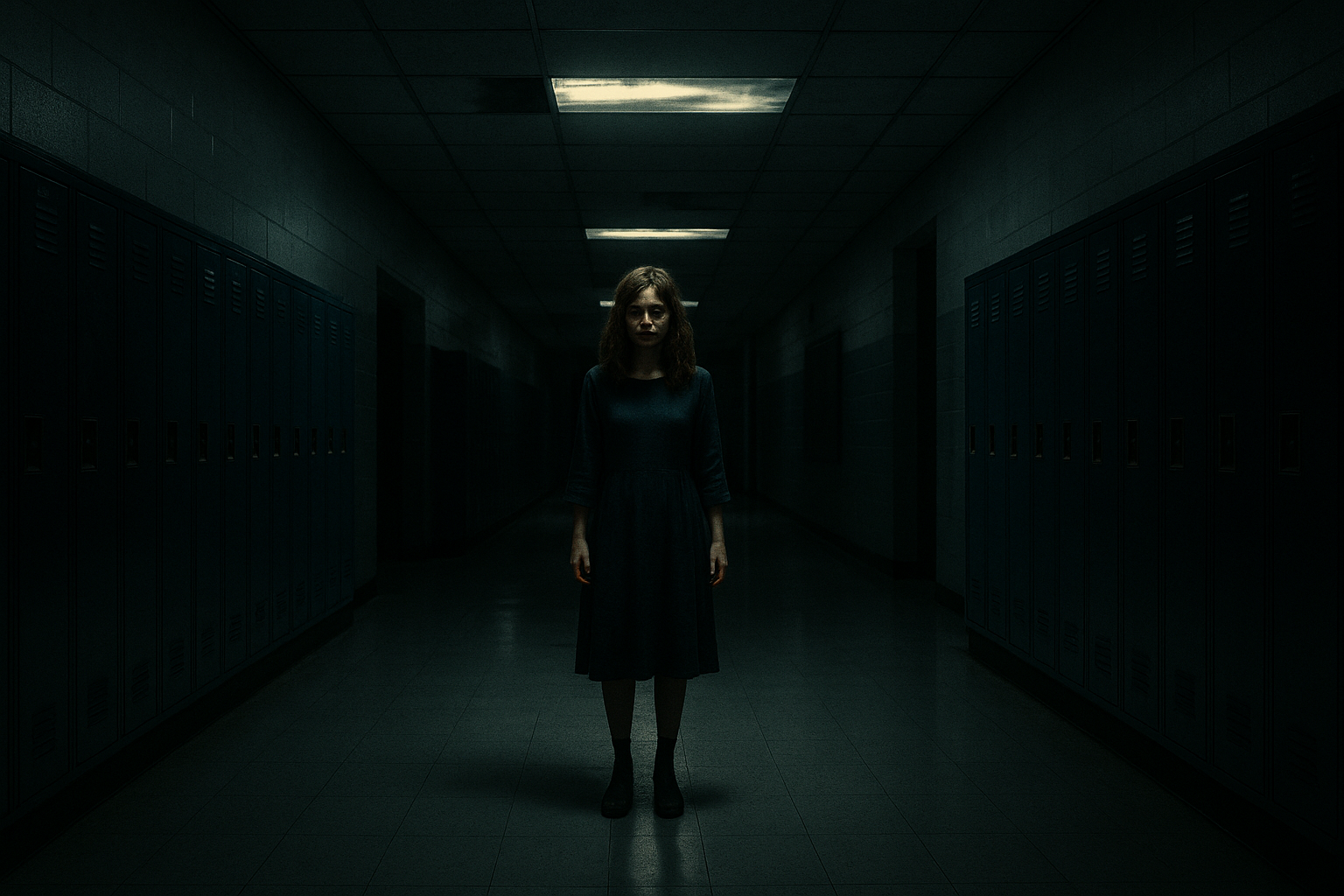
It was raining (because, of course, it was), and I ducked into a crumbling used bookstore that smelled of moldy ambition and paperbacks filled with broken dreams. This was the kind of place where the lighting was too dim, but the books stared at you as if they knew your secrets. I picked up a tattered copy of Carrie, the one with the ominous red font and a girl on the cover who looked like she’d burned down a church with her mind. I took it home, started reading, and didn’t stop. By midnight, I was sweating. By 2 a.m., I was thinking about my childhood, about being shoved against lockers, laughed at for being weird, quiet, too sensitive, too skinny. Too me. And somewhere between the gym doors closing and the pig blood falling, I whispered, “God, I wish I had powers too.”
Because here’s the brutal truth: Carrie isn’t just horror. It’s a scream trapped in a book. It’s the vengeance fantasy we all flirt with and never admit to.
The Girl, The Blood, The Fire
Carrie White is the girl no one saw until she made herself unforgettable. But even that sentence is a lie. They did see her. They saw her every day, alone, awkward, drenched in shame. They just never bothered to look past what they wanted her to be: a punchline. And then she broke. That was the straw that broke the camel’s back, wasn’t it? One humiliation too many. One drop too much. A bucket of blood and years of abuse that hit like gasoline to a slow-burning fire.
Yes, it is about telekinesis. But it is also about the moment a person says, ‘enough.’ And when Carrie says it, the world burns.
How King Almost Ghosted His Own Greatness
Stephen King threw the first draft of Carrie in the trash. Let that sink in. He literally tried to abort one of the most iconic horror novels in history. If not for Tabitha, his wife, his mirror, his rescuer, we might never have met Carrie.
King didn’t believe anyone would care about a sad, shy girl bleeding in a locker room. But that’s the thing: people care because we’ve been that girl. Maybe not in the literal sense. But in the soul sense. Shamed for wanting, for feeling, for daring to exist without apology. Tabitha saw that.
God bless the women who see what men are too broken to believe in.

Anomie in a Prom Dress
The genius of Carrie is how normal it all feels at first. It’s not a haunted mansion. No ancient curse. Just an ordinary town, an ordinary school, an ordinary girl. But under that surface? Anomie. The slow rot of values. Everyone is going through the motions of being decent while secretly drowning in cruelty. The gym decorations, the polite teachers, the hollow apologies—it’s all mascara over a black eye. Carrie isn’t the monster. The system is.
That town didn’t break Carrie. It made her.
Why It Hit Me
I was bullied. Not in the movie-of-the-week kind of way. In the subtle, soul-eroding way. The kind that makes you wish you could disappear or explode. I used to daydream about having powers. Not to hurt people, not really. Just to be seen. To flip the script. To make them feel the quiet dread I carried every day.
Reading Carrie was like finding my shadow in print. She’s not a hero, and she’s not a villain. She’s a warning. A myth. A girl who went too far because no one ever let her be.
Blood as Baptism
That prom scene? That wasn’t just revenge. It was a rebirth. The moment Carrie stopped being their victim and became their reckoning. The blood wasn’t humiliation. It was liberation, a grotesque, cinematic baptism. There’s poetry in that. A girl walks into a room full of people who laugh at her. She leaves it in flames. Tell me that’s not every misfit’s fantasy.
But King, in all his sick brilliance, doesn’t let us celebrate too long. The carnage is brutal. Innocents die. Guilt seeps in. And Carrie? She dies too. Not just literally. Spiritually. Her last moments aren’t victorious. They’re human. Because revenge doesn’t heal, it just empties the wound.
Margaret White: The Cult of Motherhood
We need to talk about Margaret. Not just because she’s terrifying, but because she represents something deeper: the lie of holy obedience. Margaret’s God is violence in a robe. Her love is a cage. She’s the kind of mother who makes you beg for hell to get some peace. Carrie’s real prison wasn’t school. It was home. And this is the part that still cuts: you can survive bullies if you have a sanctuary somewhere. But if the torment follows you into your bedroom? Into the dinner table? Into your prayers?
No power on earth can save you.
King’s Razor: Ordinary + Terror = Truth
What makes Carrie immortal is the familiarity. We know these people. We went to school with them. We might have been them. The fake-nice girl who smiles while setting you up. The popular guy who does the right thing just a little too late. The teachers who look the other way. The mother who claims it’s God’s will.
King doesn’t need monsters. He has people. And people are terrifying.
It’s been decades. The dresses have changed. The slang is different. But the pain? The loneliness? The rage? That’s timeless. Every generation has its Carries. Girls are told they’re too much or not enough. Boys who cry in secret. Kids who learn to weaponize silence because speaking only gets them hurt. We like to think we’ve evolved. But the truth? We just got better at hiding the blood.
Carrie holds up a mirror and dares us to look. Not at the horror, but at the cracks we all pretend aren’t there.
Final Thought
Have you ever wondered what would’ve happened if someone had loved Carrie properly? Not pitied her, nor used her. But loved her. Me too. But that’s not the story King wrote. And maybe that’s why it still haunts us. Because deep down, we know: there’s a Carrie in every classroom, every town, every mirror. And all it takes is one final shove for the fire to begin. Don’t be the shove.
Be the hand that pulls the story from the trash and says: Finish it.
(And if you enjoy this article enough to support my content, a donation would be greatly appreciated.)
Cheers…
Discover more from Gabriel Lucatero
Subscribe to get the latest posts sent to your email.
Join the discussion One Comment