
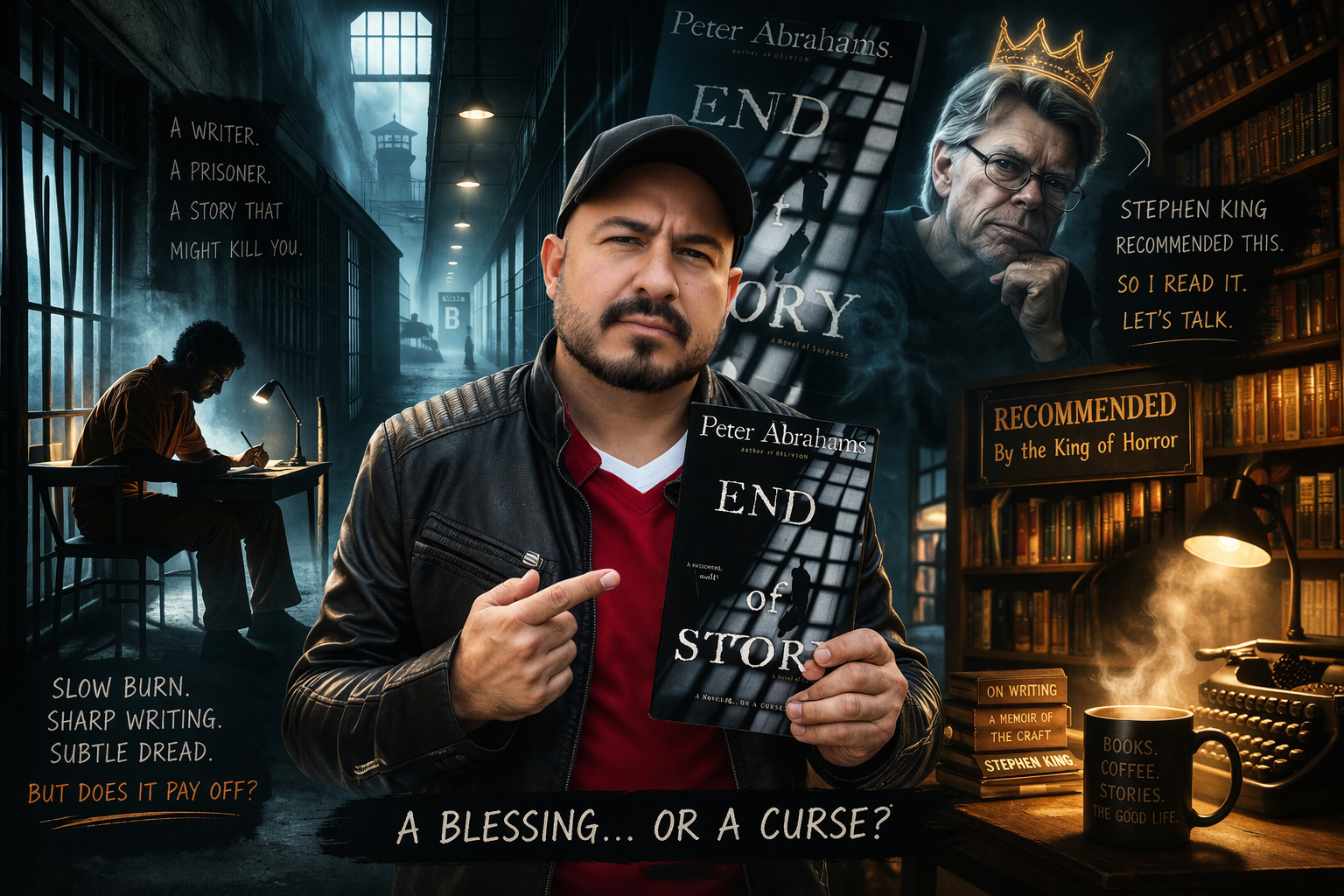

Opening Hook: The King’s Recommendation—A Blessing or a Curse?
I picked up End of Story for one reason: Stephen King said I should. Well, not me specifically, but he threw it onto his book recommendation list in On Writing, and that was enough. When the King of Horror says a novel is worth your time, you listen. So, I dove in, expecting a masterclass in suspense, a book that would grab me by the throat and refuse to let go. What I got was… well, we’ll get to that.
Premise: A Writer, a Prisoner, and a Whole Lot of “Maybe”
The story follows Ivy Seidel, a struggling writer with big dreams and a dwindling bank account. To make ends meet, she takes a job teaching creative writing to prison inmates because nothing screams “safe career choice” like mentoring convicted criminals. One inmate, Vance Harrow, turns out to be a disturbingly talented writer. He’s got skills. He’s got secrets. And Ivy? She gets sucked into a dark, tangled mystery that threatens to turn her literary aspirations into a real-life crime novel.
Sounds gripping, right? That’s what I thought too.
The Good: When It Works, It Really Works
Let’s give credit where it’s due. Abrahams can write. The atmosphere is thick with unease, the tension builds slowly but surely, and there are moments where the pages practically turn themselves. The way he captures Ivy’s desperation, the eerie pull of the prison, and the way Harrow exudes quiet menace? That’s all solid. There’s also an undeniable Hitchcockian vibe throughout. The creeping paranoia, the feeling that something isn’t quite right, the way the story inches toward inevitable disaster. When End of Story works, it works.
The Bad: A Slow Burn That Sometimes Just… Burns Out
But here’s the problem: for a thriller, End of Story sure takes its sweet time getting thrilling. The pacing is uneven. There are stretches where nothing happens except Ivy doubting herself, overanalyzing Harrow’s writing, and obsessing over whether or not she’s a “real writer.” (Spoiler: If you spend half your time asking yourself that question, you probably already know the answer.)
And Harrow? Yeah, he’s creepy. Yeah, he’s mysterious. But does he do enough to justify the build-up? Debatable.
The Writing: Clean, Sharp… Maybe Too Safe?
Abrahams writes with precision. No wasted words, no unnecessary flourishes. It’s a stripped-down, efficient style that serves the story well. But here’s the thing, sometimes, too clean can be too forgettable. King recommended this book, but let’s be real: if you put End of Story next to something like Misery or The Shining, it feels like a quiet, polite guest at a dinner party sitting next to a couple of drunk, chain-smoking rock stars.
Final Verdict: Worth the Read?
Here’s the deal: If you love slow-burn suspense, subtle psychological tension, and a protagonist who spends a lot of time second-guessing herself, End of Story might be your thing. But if you’re looking for a thriller that thrills—one that grabs you early and refuses to let go—you might find yourself waiting for a payoff that never quite hits as hard as it should. Is it good? Yes. Is it great? Ehh… So, thanks, Mr. King, for the recommendation. But next time, I’ll double-check before blindly following your booklist.
—
Liked what you read? Consider a donation. My future kids will thank you for it.
Discover more from Gabriel Lucatero
Subscribe to get the latest posts sent to your email.