
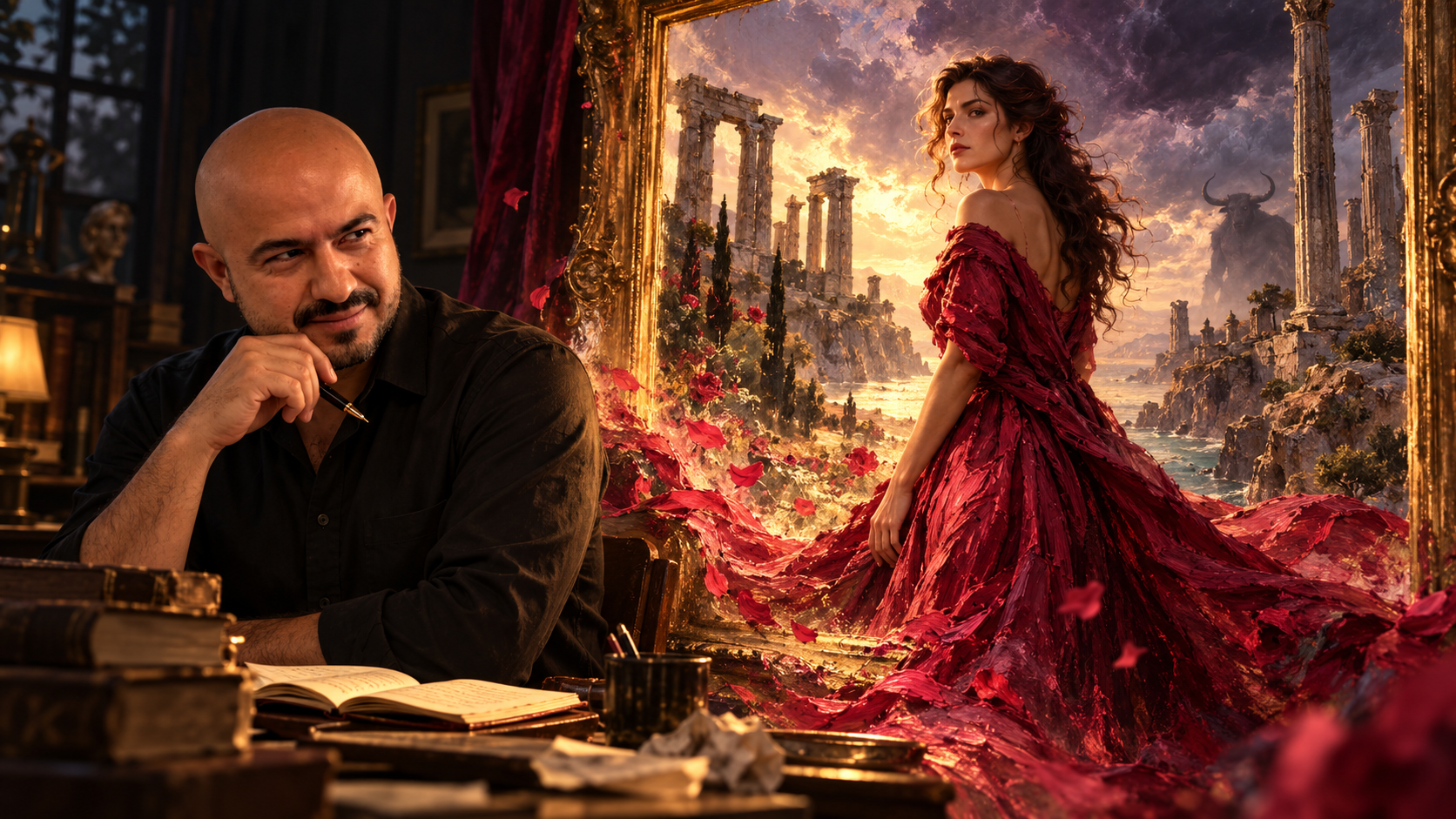

The woman in the painting was waiting for me.
I wasn’t going through anything when I read Rose Madder. No tragic breakup, no existential meltdown, no inner child clawing its way out of a dark hole. Just me and a paperback I picked up out of respect for a man whose books had already taught me to fear high school girls and question whether clowns and sewers should ever coexist. At that point, Stephen King wasn’t just a storyteller to me. He was a gatekeeper to other worlds. Some full of monsters. Some full of mirrors.
But Rose Madder? That was something else.
Because this wasn’t a story about the supernatural. It was about leaving. About a woman bleeding quietly into the mattress after years of violence, whispering to herself: “No more.” A single drop of blood becoming a revolution.
Norman was the real horror in Rose Madder. Forget about the painting that bent space, or the bull-headed creature in the mythic world behind the canvas. He was the cop, he was the husband, with a name that sounds harmless until you see what hides inside it. And just wait until you hear how he says her name.
Rosie.
Rosie Daniels, who one day decides she’s had enough, packs a bag, walks out the door, and keeps walking. No grand speeches, no dramatic soundtrack, just someone finally saying ‘fuck this’ to a life that had been draining her slowly. I didn’t know it back then, but Rose Madder would end up writing me as much as I read it. Because somewhere between Rosie discovering the women’s shelter and stepping into that surreal painting with its Greek columns and wrathful goddess, I started writing a story of my own. One I named Amalia.
She wasn’t Rosie, but she was her cousin in spirit. Mexican, strong, quiet at first, but louder as the pages went on. A survivor of her own kind of hell. I remember sitting at my desk, feeling something push itself out of me. That story became my first, the first I ever finished, the first that felt like it mattered. And it was because of King, because of that painting, because of Rosie walking into a new world, one she didn’t fully understand but was willing to enter anyway, just to find herself again.
King caught hell for Rose Madder, by the way. Critics called it uneven, said the mythological elements didn’t land, and that the feminist undercurrent was heavy-handed, and that Norman was too cartoonishly evil.
They missed the point.
The painting had to be mythological because trauma doesn’t speak in prose. It speaks in metaphor. It doesn’t just bruise your skin, but it warps your reality. When you’ve been trapped inside someone else’s hell for years, stepping into a surreal landscape to confront a Minotaur doesn’t feel that far off. It feels like any given Tuesday.
Norman was every abuser who wears a badge, every man who uses power as a weapon, every wolf who hides behind paperwork and polite smiles.
There’s a part near the end where Rosie realizes that vengeance and power aren’t the same as peace. That surviving isn’t the final chapter; it’s the preface. The trauma never disappears, but it no longer defines her.
I’ve seen this painting in dreams, a woman in a rose-colored gown, standing just out of reach, looking like she’s been waiting for me to show up and finally grow a pair. I don’t know if Rose Madder is one of King’s best books, but I love it because it gave me Amalia, it gave me my voice, and it gave me the courage to believe that stories can save people.
And that’s enough.
That’s more than enough.
(And if you enjoy this review enough to support my content, a donation would be greatly appreciated.)
Discover more from Gabriel Lucatero
Subscribe to get the latest posts sent to your email.